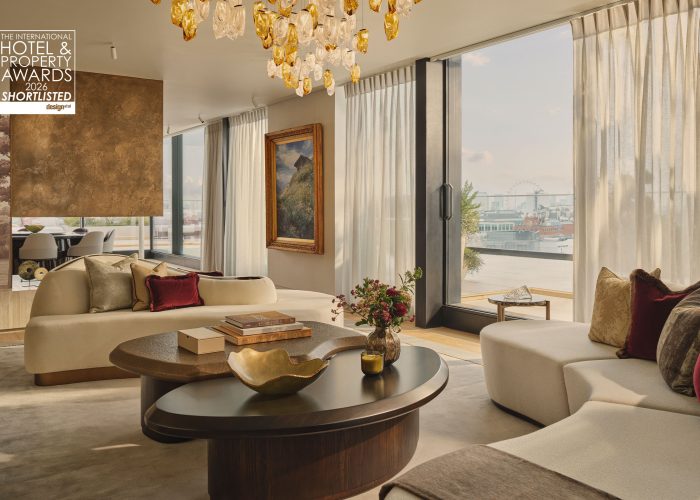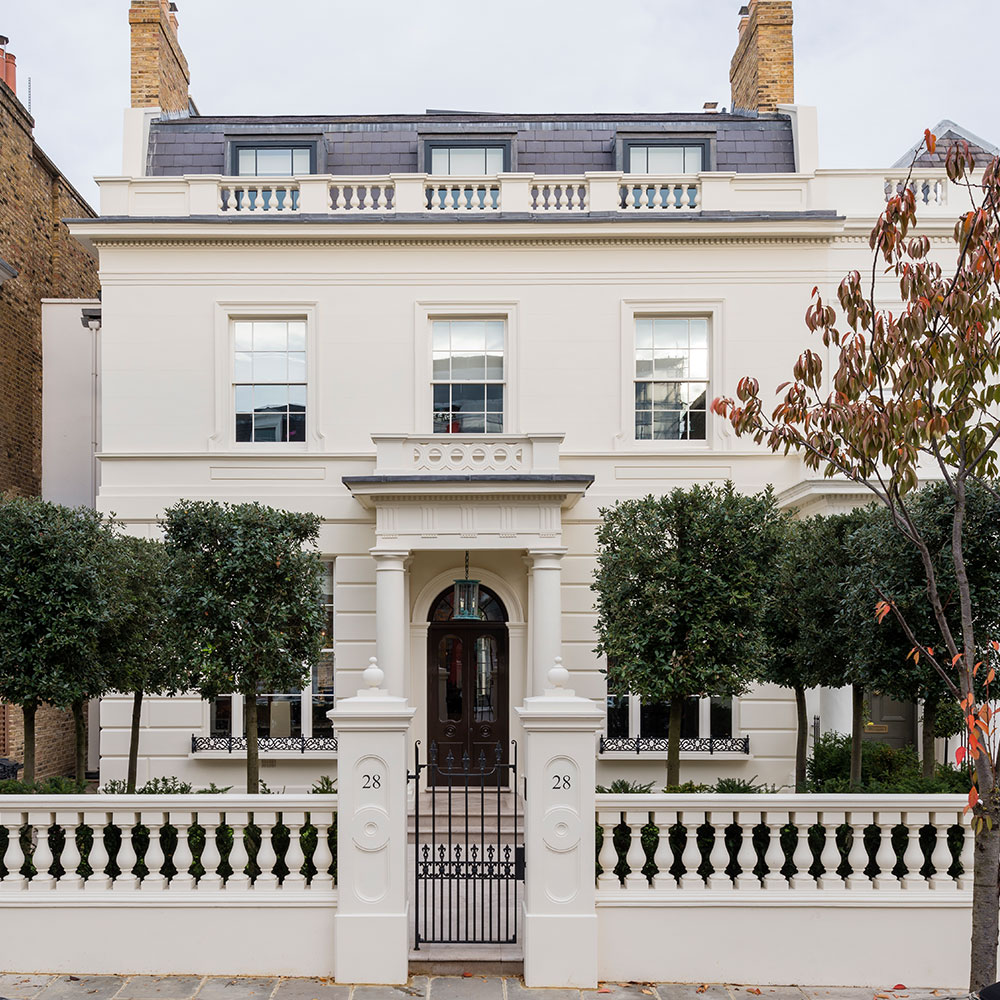
In the rarefied streets of Kensington and Chelsea, where stucco façades hold centuries of stories and every cornice carries a quiet authority, architecture is never just about space, but about stewardship.
To design here is to enter into a dialogue with history, one that demands both fluency and restraint.

Planning in this part of London is shaped by its past. Conservation areas protect the character of a place, from the rhythm of terraces to the detailing of windows and doors. These guidelines are precise and often demanding, requiring a careful choreography between architect, client and authority. Kensington & Chelsea remains one of the most historically layered boroughs in the city, comparable in sensitivity to places such as the Cotswolds.
What can appear restrictive at first often leads to better design. When understood properly, these parameters guide decisions that feel considered and appropriate to their setting. Within this framework, there is room for evolution. The question is how to build with care.
Certain challenges tend to be underestimated. Changes to façades are tightly controlled, particularly anything that alters external appearance. Even small adjustments, such as new windows or double glazing, require careful handling. Rights of light are another key factor, rooted in long-standing principles that protect privacy and the relationship between neighbouring homes.
When approached with clarity, these constraints can shape stronger outcomes. They encourage rigour and a more thoughtful response. The key is to address them early. Every project begins with listening. Understanding how a client wants to live allows the brief to be shaped in a way that aligns ambition with planning reality.
A successful planning strategy depends on clarity and trust. Clients benefit from being closely involved, with expectations set from the outset and revisited throughout. Many come to us following a refusal, often where the original proposal lacked transparency or alignment with planning policy.
We take a direct approach. The process is explained clearly, decisions are grounded in experience, and communication remains open.
Engagement with planning authorities is most effective when it begins early- often far earlier than clients anticipate. In boroughs like Kensington & Chelsea, where each street can carry its own micro-history, collaboration is essential. Ongoing dialogue, timely responses, and a willingness to adapt all contribute to a smoother process.
Planning is a conversation and like any meaningful dialogue, it thrives on mutual respect
Sensitive design comes down to judgement. It requires an understanding of what should be preserved and where change can be introduced.
In practice, this often involves retaining and restoring original features, while introducing contemporary elements in a measured way. The aim is to create a sense of continuity so that new work feels aligned with the building rather than separate from it. It means celebrating original details rather than erasing them. It means designing interventions that feel inevitable, rather than imposed. Above all, it means creating spaces that will age gracefully, in quiet continuity with their surroundings.
Challenges often emerge during construction. Working within historic buildings demands precision, from protecting original fabric to monitoring movement and vibration. These technical considerations need to be anticipated early.
Timing is another factor. Planning in conservation areas can take longer than expected, and a realistic programme supported by patience is essential.
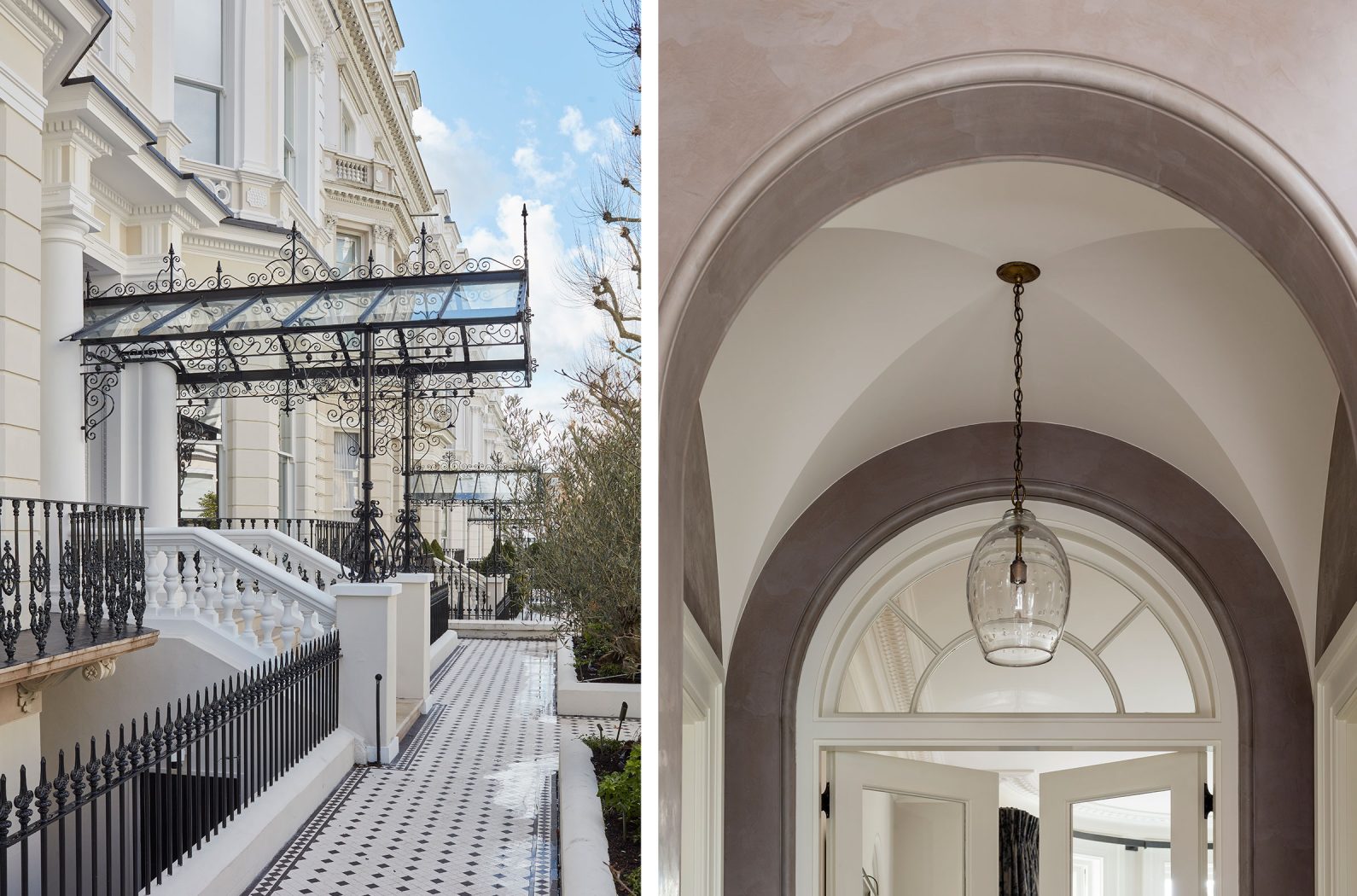
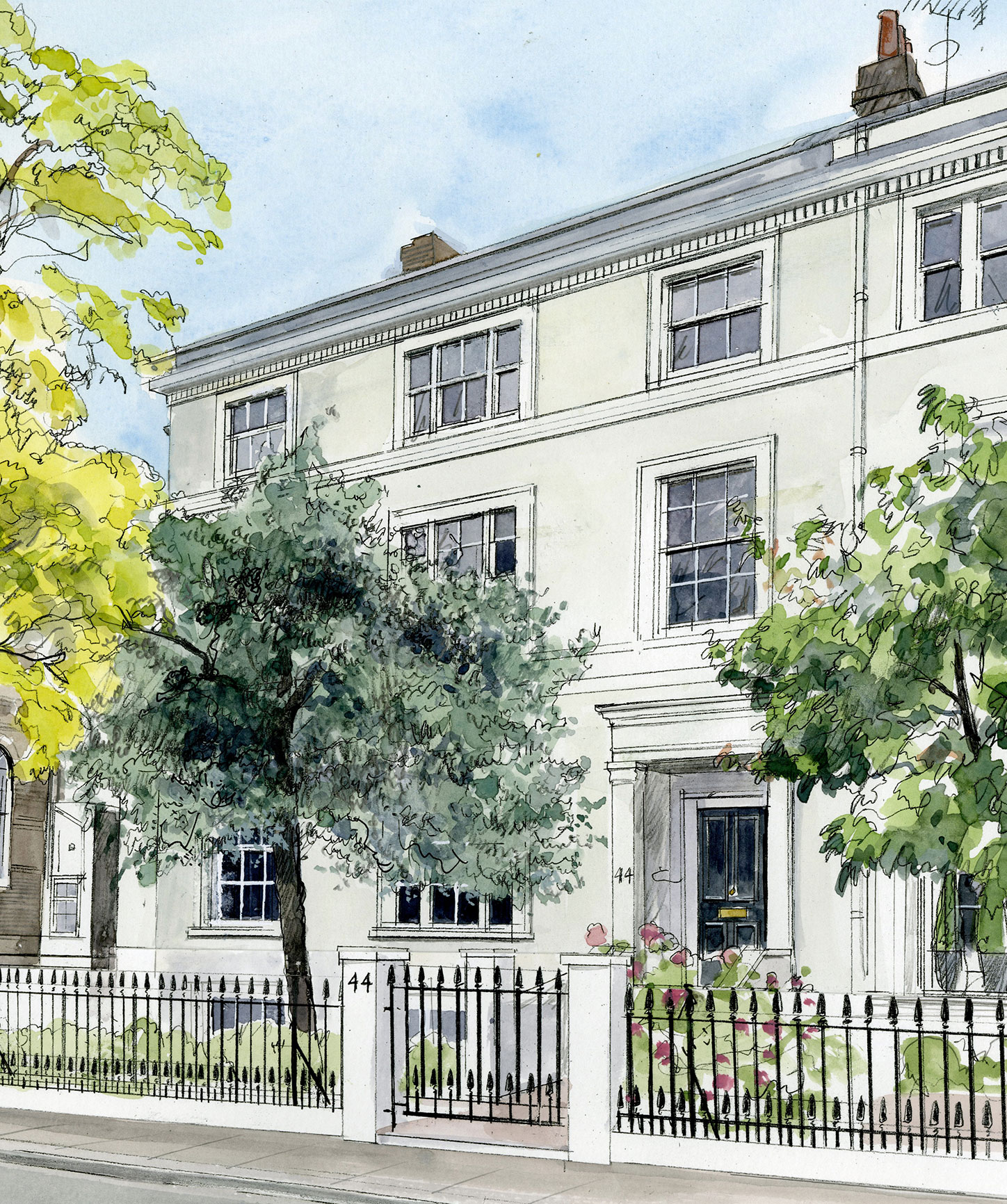
When handled well, planning has the potential to unlock significant value – both tangible and intangible. A recent project in Kensington, for which planning has just been granted, offers a clear illustration.
The property, altered in the 1930s, had lost much of its original charm and had fallen into disrepair. Our approach was rooted in restoration: a careful strategy to return the building to its intended form, while quietly preparing it for a new chapter. Studio Indigo advocated for a reinstatement of its original appearance – an approach that required conviction, particularly in the face of some local opposition.
The success of the application not only enhances the property’s value but allows it to sit more comfortably within the architectural language of its surroundings – reintegrated into the street as it was always meant to be.
Interventions of this kind, particularly when paired with considered additions such as basements, can unlock substantial uplift. In some cases, this can reach around 20 percent. It requires patience and investment at the planning stage, but the long-term return – financially and architecturally – can be considerable.
Behind every successful application is a network of relationships. A strong, respectful rapport with planning authorities plays an important role, supported by experienced consultants where needed. Their knowledge of local policy and process can be invaluable on complex sites.
Equally important is the relationship with the community. Engagement with neighbours is equally important. Clear, early communication helps build understanding and can reduce resistance. A simple conversation can often shift the tone of a project.
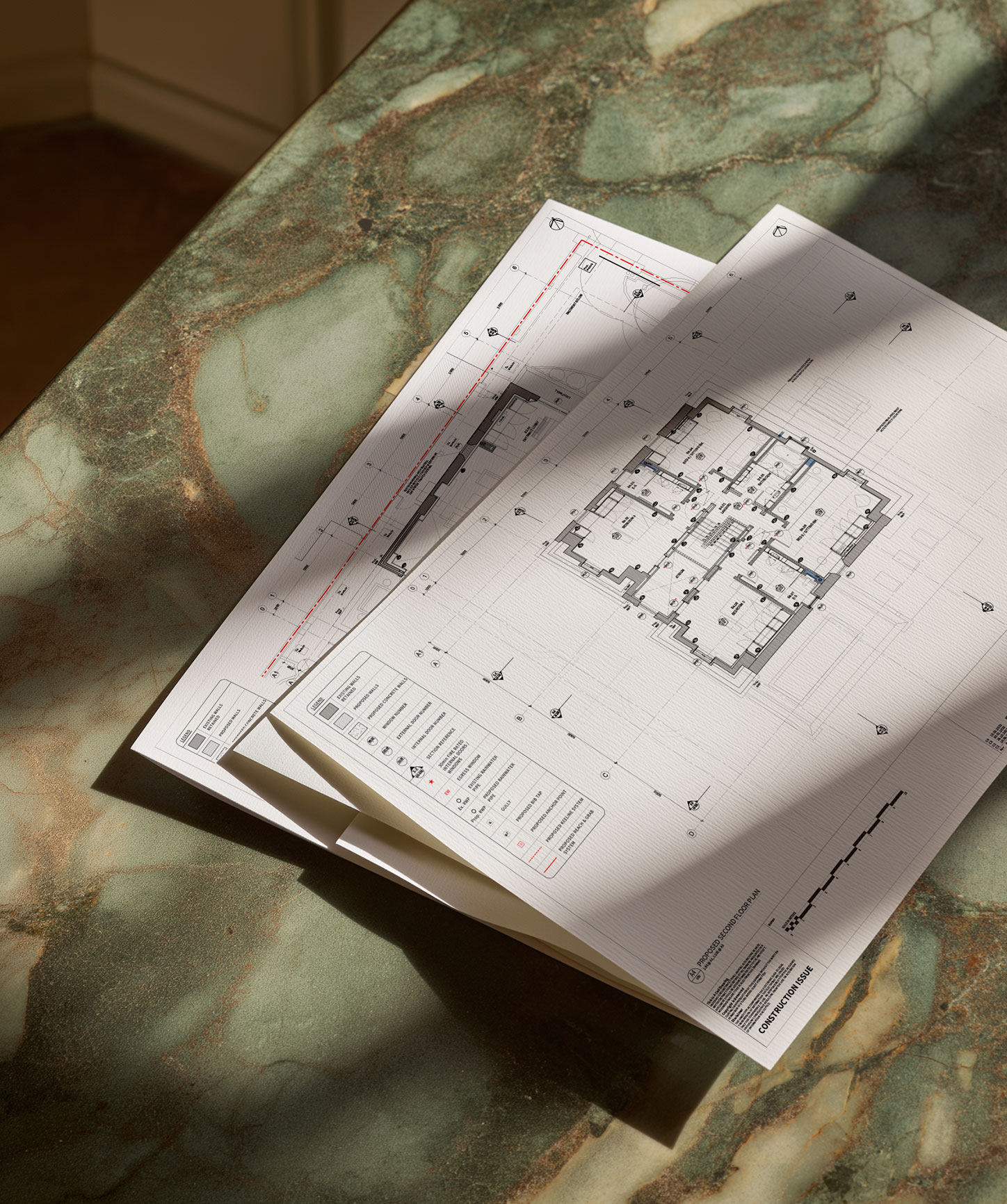
The strength of a planning application lies in how clearly it communicates. Detailed drawings are essential, but so is the overall narrative that sits around them.
Each submission is carefully reviewed, with moments where we deliberately step back to edit, refine and simplify. The aim is to ensure it can be understood without us in the room to explain it. This becomes particularly important as applications are open to public comment.
We often ask ourselves a simple question: would someone unfamiliar with the project understand what is being proposed? Seeing the work through fresh eyes helps us test that clarity.
Presenting information in a way that is both comprehensive and accessible can ultimately shape the outcome. It is often this clarity, as much as the design itself, that determines whether a proposal is supported or challenged.
Clients come to us for complex projects because we approach them in their entirety. Architecture and interior design are developed together, allowing for a complete understanding of both spatial and experiential needs.
This integrated perspective supports better decisions at every stage and underpins a planning success rate of 99%. It reflects not just expertise, but a consistent commitment to thoughtful, considered design.